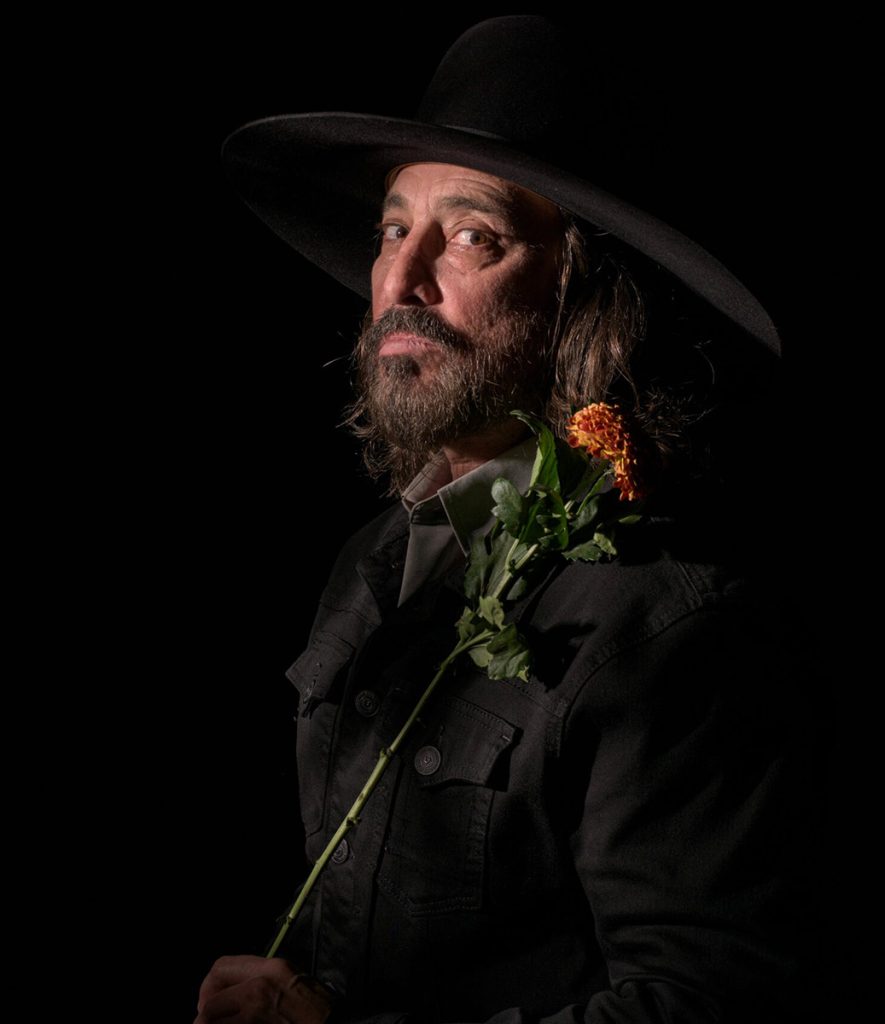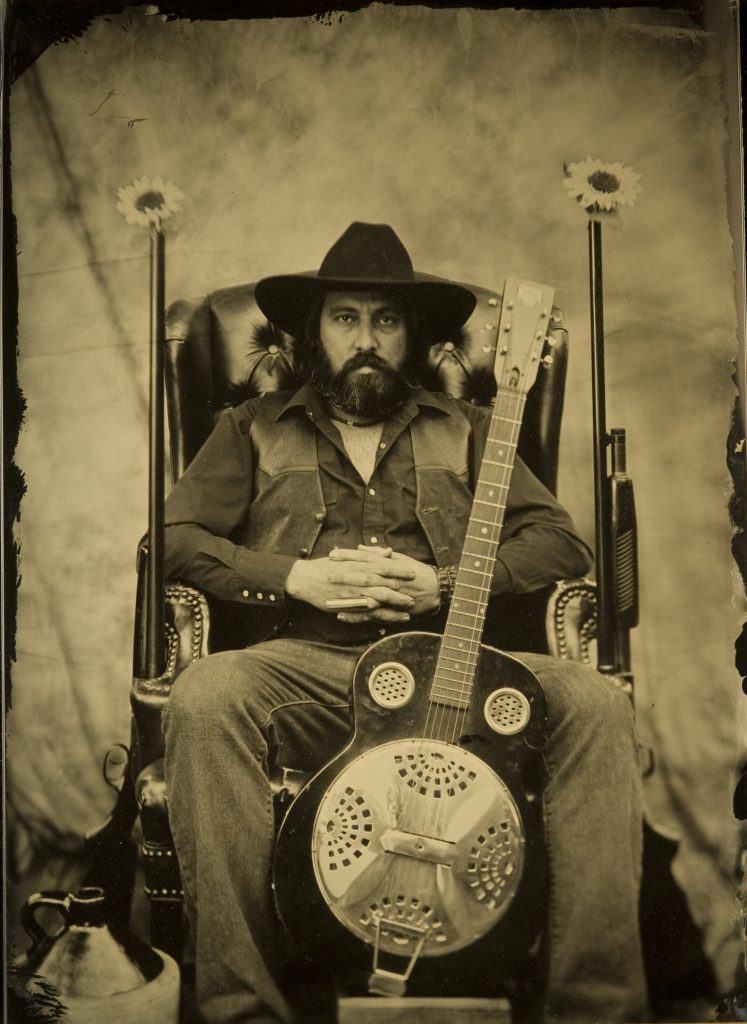
A BIOGRAPHY
Born and raised in southern Louisiana, Dege Legg is of Cajun-French and Irish ancestry.
To support his creative obsessions, Dege has worked many odd jobs over the years, including cabdriver, machinist, case worker in a homeless shelter, delivery driver, dishwasher, tire mechanic, cook, journalist, etc.
Obsessions: art, creativity in any form, camping, beaches, nature, Dobros, Pablo Picasso, Don Quixote, Vincent van Gogh, Henry Miller, Gabriel Garcia Marquez, Bukowski, Faulkner, Black Sabbath, Blind Willie Johnson, Sonic Youth, UFOs, junkyards, zero point energy, kindness, barbarism, crop circles, sitars, psychic telepathy, quantum metaphysics, rodeo clowns, living a good life, service to others.
In 1994, Dege Legg founded the underground, southern psych-rock band Santeria, which toured and gigged in relative obscurity for 10 years, pounding out a strange variety of swampedelic, “psyouthern rock” that relied less on chest-thumping and beer guzzling, and more on quasi-mystical attempts at hayseed transcendence.
In 1997, Dege Legg recorded and released Bastard’s Blues, a hand-dubbed cassette release. The album in many ways has served as the blueprint for all his following solo releases.
In 1999, Dege Legg self-released a crudely recorded, 4-track concept album on CDR titled Love Letters & Suicide Notes.
In 2002, Santeria released the landmark, underappreciated album House of the Dying Sun. Five months later, after a west coast tour, the band went on indefinite hiatus amidst a string of bad luck and hardships that were sometimes seriously, sometimes comically, attributed to a voodoo curse believed placed on the band.
In 2003, Dege Legg lived in cheap, low-rent motels for nine months and wrote about the experience before eventually moving into a trailer park.
From 2003-2004, Dege Legg worked as a nightshift cabdriver for a City Cab Co. in Lafayette, LA. His experiences on the job were documented for blog and book form (Cablog: Diary of a Cabdriver).
In 2004, Dege Legg improvised and recorded an album (Trailerville) of “guitar scapes” in the trailer park where he lived. BUY Trailerville.
In late 2004, Dege Legg briefly moved to Los Angeles to record demos on a spec development deal. He abandoned the project and moved back to Louisiana four months later after realizing he was a willing participant in “creating something unique that he could not understand or making the worst music ever made.”
From 2004-2005, Dege Legg joined swamp rocker CC Adcock’s touring band as second guitarist in The Lafayette Marquis.
In 2005, Dege Legg founded the 6-piece ensemble Black Bayou Construkt and released the album Kingdoms of Folly in 2009.
In 2006, tiring of forgettable gigs in half-empty clubs, Dege Legg began playing short live and improvised sets in non-traditional venues and filming the proceedings on cheap digital cameras. The venues included open fields, abandoned houses, backwoods alcoves, caves, cheap motels, dumpsters, swamps, parking towers, public bathrooms, sheds, and ponds. The results were posted to the Brother Dege YouTube Channel where they are still viewable.
In 2007, Dege Legg lived in a homeless camp and wrote a feature cover story on the experience titled Slipping through the Cracks for the Independent Weekly in Lafayette, LA, which won a Louisiana Press Award.
In 2009, Dege Legg began recording songs for the album Folk Songs of the American Longhair in nontraditional spaces (elevator shafts, open fields, abandoned houses) before eventually recording the tracks at home and in a shed behind his rent house in Lafayette, Louisiana.
In 2010, Dege Legg released the slide guitar album Folk Songs of the American Longhair under the name Brother Dege.
In 2010, just a month after it’s official release, Dege Legg was contacted by the producers of The Deadliest Catch and asked to use the song “Hard Row to Hoe” (from Folk Songs of the American Longhair) as theme song of their spin-off “After the Catch.”
“As much as I rebelled against Southern music, it inevitably seeps through me when I sit down with an acoustic guitar. It’s slow, moody, and meditative.”
BROTHER DEGE
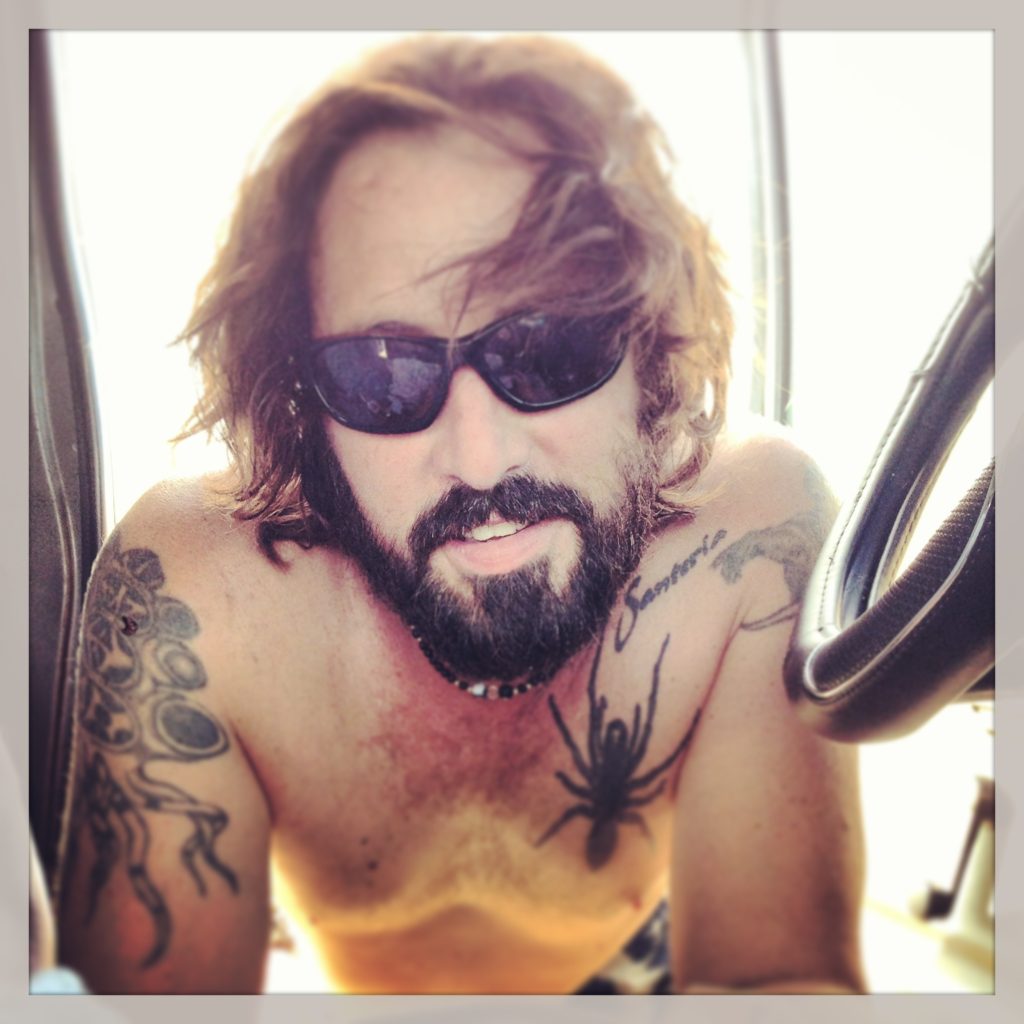
From 2011-2013, Dege Legg worked full-time in a men’s homeless shelter in Lafayette, LA.
In 2011, Dege Legg completed his first solo tour of Holland and Belgium as Brother Dege.
From 2011-2012, Dege recorded the songs for How to Kill a Horse (the follow album to American Longhair) in an empty warehouse in Lafayette, LA.
In December 2012, Brother Dege’s song “Too Old to Die Young” was hand-picked by Quentin Tarantino for inclusion in the movie and official soundtrack to Django Unchained where the song appeared alongside such artists as James Brown, Tupac Shakur, and Ennio Morricone.
Dege Legg is the author three books: The Battle Hymn of the Hillbilly Zatan Boys, Into the Great Unknown (Santeria Tour Journals), and Generating Hope: Stories of the Beausoleil Louisiana Solar Home.
In 2013, Brother Dege, along with other artists, was nominated for a Grammy for the Django Unchained soundtrack.
Brother Dege’s music has been featured in Quentin Tarantino’s Django Unchained as well on the Discovery Channel and the National Geographic Channel and in these movies: Half the Road, The Afflicted.
In 2013, Brother Dege began touring with his band The Brethren as well as doing solo shows. Brother Dege & the Brethren now tour the USA and Europe annually.
In 2014, Dege Legg co-wrote and edited a book with architect and Professor of Architecture, Geoff Gjertson on sustainable architecture titled Generating Hope: Stories of the Beausoleil Louisiana Solar Home.
In 2015, Brother Dege wrote and recorded the album Scorched Earth Policy. It was recorded in a warehouse and an office rental space.
From 2015-16, Brother Dege & the Brethren toured Europe four times.
In 2017 & 2018, Brother Dege wrote, recorded, and released the concept album Farmer’s Almanac on his own label Psyouthern Media.
On March 8, 2024, Dege Legg took his own life. His album AURORA was released on Prophecy Productions & Records seven days later.
Aurora’s Wake: On Dege Legg’s death and final act
By Scott Jordan |
When the texts and phone calls and social media spread on Friday, March 8, with the news that Dege Legg, aka Brother Dege, was dead, the collective anguish and cries of grief were magnified by one horrific, irreversible truth, the worst-kept secret in town, a fact that was left out of local news reports: Dege took his own life.
Unfathomable. Not Dege. Not one of the most selfless dudes in Lafayette, not the guy who spun magic out of dust, triumph out of heartbreak. Not the guy who worked years for St. Joseph Shelter for Men, forever reaching out to the less fortunate.
In the outpouring of tributes posted online, there was one emphatic and empathetic thread — Dege always showed up for others.